
September 4, 2026
Stake Dice Bot Controls for Disciplined Sessions
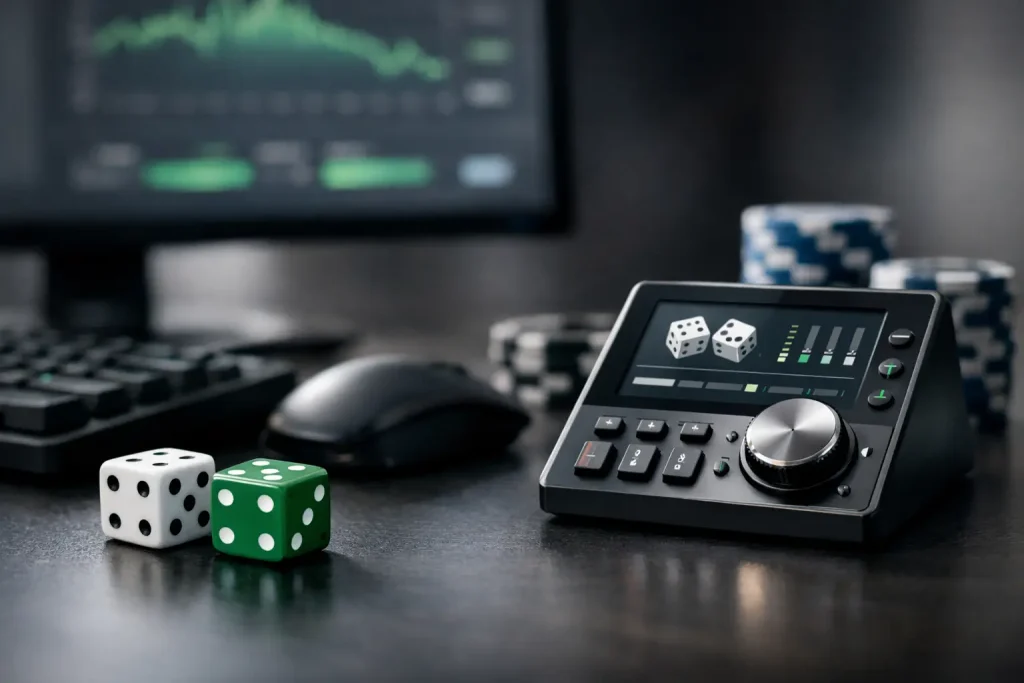
A Dice session can become repetitive fast: select an over or under target, place the same wager, react to a result, then repeat hundreds of times. A Stake Dice bot replaces that manual loop with a defined execution plan. It does not change Dice math or create guaranteed outcomes. What it can do is apply your chosen bet logic consistently while military-grade session guards control exposure, pacing, and runtime.
For experienced players, that distinction matters. Automation is useful when it removes missed clicks, emotion-led stake changes, and inconsistent stopping decisions. The goal is not to leave a script running without oversight. The goal is to create a measurable session with clear parameters before the first wager is sent.
What a Stake Dice Bot Automates
A properly configured Stake Dice bot operates around the variables that already define a Dice wager: wager size, win chance, payout multiplier, bet direction, and the response to a win or loss. Instead of manually repeating those instructions, the software executes them through a Windows-based browser automation workflow.
The core configuration normally begins with a starting bet and target multiplier. A lower multiplier produces more frequent wins with smaller individual returns, while a higher multiplier accepts longer losing stretches in exchange for less frequent payouts. Neither setting is inherently better. It depends on bankroll size, drawdown tolerance, and how aggressively the progression profile responds after a result.
That profile is the part users should treat with the most respect. A bot can keep the same stake after every round, increase after a loss, reduce after a win, or follow a custom progression. Flat betting is simpler and easier to audit. Loss-based increases can recover a sequence only if the bankroll can withstand the required chain of wagers. The faster the increase, the faster a session can reach its stop-loss.
A serious bot also handles the operational work around betting. It can apply configurable pauses, use a human-like betting pattern rather than firing at a fixed mechanical speed, rotate session behavior, and apply seed changes at scheduled intervals. These controls are not a promise of any platform outcome. They are execution settings designed to make long-running operation more deliberate and less repetitive.
Build the Strategy Before You Press Start
The best Dice configuration is usually the least ambiguous one. If a setting cannot be explained in a sentence, it is difficult to monitor when volatility arrives. Define the objective first: are you testing a low-risk flat-bet pattern, operating a capped recovery sequence, or running a short session around a fixed daily target?
Start with four decisions: the base wager, the selected win chance, the progression rule, and the maximum acceptable loss. The base wager should be small enough that the planned progression has room to operate. Setting a $1 starting bet is not conservative if the bot doubles after every loss and the available session bankroll is only enough for a few steps.
Next, choose the target multiplier to match the intended rhythm. A near-even Dice target has a different loss distribution than a high-multiplier approach. This affects not only win frequency but also the length of the losing streak your settings need to tolerate. Historical results do not remove house edge or predict the next roll. They are useful only for testing how a configuration behaves under different sequences.
Then configure a hard stop-loss before configuring a profit target. This order is intentional. A daily target is an operational endpoint, not a reason to raise risk when a session starts poorly. The stop-loss is the boundary that prevents a predefined test from becoming an open-ended chase.
Session Guards Are the Real Control Layer
The betting logic receives most of the attention, but session guards often determine whether automation remains usable over time. They translate a strategy from an idea into a controlled operating range.
A well-built Dice setup should use a maximum loss, a profit target, and a wager count or time limit. Each guard catches a different failure mode. A loss limit caps financial exposure. A target closes a favorable session according to plan. A time or bet-count limit prevents a low-stakes session from running for hours simply because no other trigger was reached.
Consider a user running a modest base wager at a 2x-style target with a loss progression. The bot may remain within acceptable limits through several losses, then quickly approach the configured drawdown threshold during an extended streak. A stop-loss ends the process without requiring a manual decision in the worst possible moment. That is where automation can be more disciplined than manual play.
Session pauses matter as well. Short breaks between wager blocks reduce continuous click activity and give the user clear moments to review balance, progression level, and recent variance. Login cycles and 2FA-aware access workflows should always respect the account owner’s security controls. Never disable security protections or attempt to circumvent casino access requirements for convenience.
Configure Human-Like Pacing With Purpose
Speed is not automatically an advantage. Faster wagering means faster variance, faster exposure, and less time to recognize that the selected progression is too aggressive. For that reason, betting intervals should be selected for control rather than maximum rounds per minute.
A human-like betting pattern can vary pauses within a defined range and introduce breaks after a selected number of bets. This is useful for users who do not want a session to look or behave like an infinite, fixed-speed loop. More importantly, it gives the configuration a realistic cadence when operating through a local PC or a VPS.
A VPS can be practical for users who need the Windows application to remain available without leaving a home computer running. It is not a substitute for supervision. Before operating remotely, verify that the bot can reconnect correctly, that account access is stable, and that every stop condition has been tested with minimal stakes.
Test a Stake Dice Bot at Minimum Stakes
Treat initial setup as a technical test, not as a production session. Use the minimum practical wager size and observe the full cycle: login, game selection, wager placement, win response, loss response, pause timing, stop triggers, and shutdown behavior. Confirm that the on-screen settings match the settings you intended to deploy.
Pay special attention to percentage-based changes. A 25% increase after a loss behaves very differently from a 100% increase, especially after consecutive losses. Also check whether the bot resets to the base bet after a win, after a recovery threshold, or only at the start of a new session. Small configuration assumptions can create large differences in real exposure.
Seed management should be equally deliberate. Changing a client seed does not alter the house edge, predict results, or turn randomness into an advantage. It is an account-level operational preference that should be used according to the platform’s available controls and your own recordkeeping habits.
StakeProSoft builds its Windows automation around these practical layers: game-specific wager controls, configurable behavior patterns, and guardrails that keep session rules visible. The useful feature is not a dramatic claim about beating Dice. It is the ability to execute a tested configuration without manually managing every round.
Common Configuration Errors
The most expensive error is setting a progression without calculating its worst-case path. A sequence that looks manageable after three losses can become unworkable after eight. Before running, calculate the wager amount at each planned step and compare the cumulative total against the session stop-loss.
Another error is treating profit targets as signals to increase risk. A target should be a finish line. If it is not reached within the session limits, the bot should stop and preserve the result rather than extending the runtime indefinitely.
Finally, do not confuse unattended operation with risk-free operation. Dice remains a chance-based casino game. Automation provides repeatability, not prediction, and no bot can remove the house edge. Use only funds allocated for entertainment, operate only where permitted, and keep the session controls active at all times. This software is for adults 18+ who understand the risks of online gambling.
The strongest Dice setup is usually not the fastest or most aggressive one. It is the one whose next action is already defined, whose downside is capped, and whose stop button is built into the plan before the first roll.