
September 2, 2026
What Roulette Predictor Software Can Actually Do
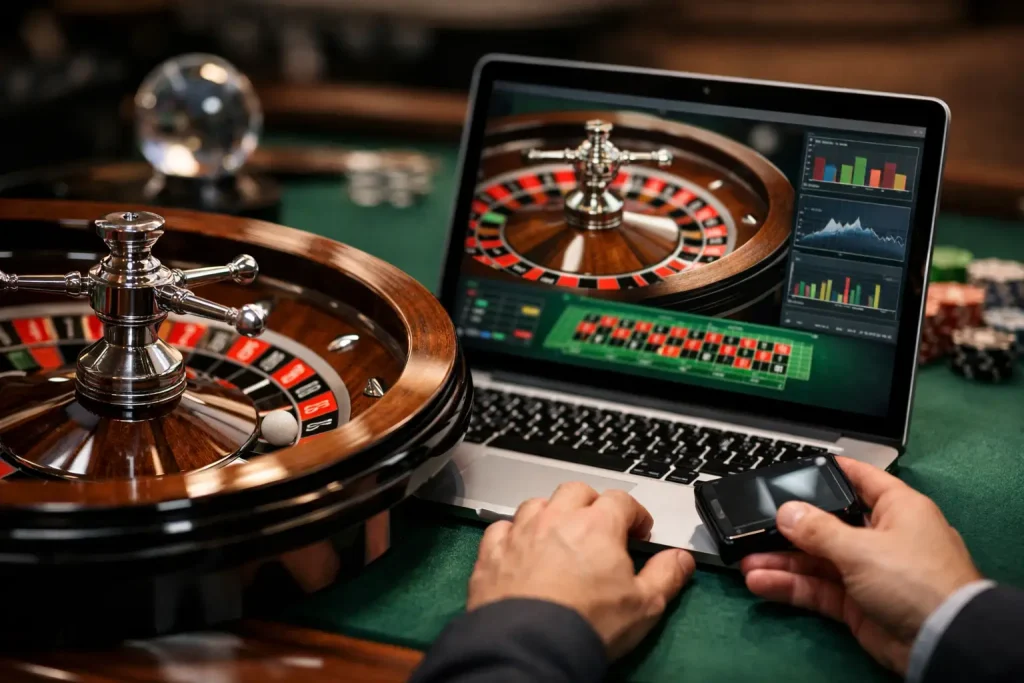
A roulette predictor software setup is not a magic wheel reader, and serious players should be suspicious of anything marketed that way. Its practical value is different: it can analyze recorded spin behavior, identify statistical sector tendencies, apply a defined betting plan without manual drift, and enforce the limits that are easy to ignore during a long session. For players using supported online casino environments, that combination of analysis and execution is the real product.
The distinction matters. Roulette remains a negative-expectation casino game over the long run. No neural-network brain file, progression system, or click automation layer can remove the house edge or promise profit. What capable software can do is turn a user-defined process into a repeatable, controlled operation – with less repetitive clicking, fewer impulsive changes, and clearer financial boundaries.
Where Roulette Predictor Software Fits
A predictor is most useful when it is treated as an analysis engine connected to a disciplined execution layer. The analysis side monitors outcomes and evaluates whether recent data creates a usable directional signal, such as a sector bias, color trend, or distribution that matches the configured model. The execution side places the selected bets, manages stake progression, and observes session guards.
That is a very different workflow from watching a table, chasing the last few spins, and increasing bets because a number “feels due.” A number is not due on a properly random roulette wheel. Statistical models do not change that fact. They look for measured conditions that fit their logic, then stand aside when those conditions are absent or too weak.
For online players, the automation layer also solves a basic operational problem. Manual roulette sessions are repetitive and emotionally noisy. A player can misread a result, skip a stop-loss, change a stake profile mid-drawdown, or stay active after hitting a daily target. Software does exactly what its active configuration permits. That is often more valuable than the forecast itself.
How Neural Sector Forecasting Works
Roulette forecasting tools generally begin with an outcome history. The program records spins, organizes results by number, color, parity, dozen, column, and wheel sector, then applies its statistical logic to the data. More advanced builds use a neural-network model to score sector probabilities based on the sequence and patterns it has observed.
The output should be understood as a probability ranking, not a certainty. If the model assigns stronger confidence to one wheel section, the software may recommend or place a corresponding sector bet. It may also wait. A well-designed predictor needs a no-bet state because forcing action on every spin is not analysis – it is just constant exposure.
The quality of a signal depends on the roulette format and the available data. Live tables, automated wheels, and RNG roulette products do not behave identically from an operational perspective. A model designed around sector behavior may be relevant to one format and largely unhelpful in another. That is why game-specific configuration matters more than generic claims about “AI roulette.”
Neural analysis also has a trade-off. A model tuned too aggressively can react to ordinary variance and create noisy signals. A model tuned too conservatively may place very few bets. There is no universal setting that is right for every bankroll, table speed, or drawdown tolerance. The goal is not maximum activity. The goal is to run only the level of exposure a player has explicitly accepted.
Prediction Is Not a Guarantee
Even a strong-looking run can reverse immediately. Roulette outcomes can cluster, alternate, repeat, or appear to form patterns without producing a durable advantage. This is normal variance, not proof that a system has stopped working.
A credible roulette tool therefore needs loss controls at least as much as it needs prediction logic. If a user only focuses on the highest-confidence calls while ignoring the stop-loss panel, the setup is incomplete. The point of automated operation is to protect the plan from the user as well as from the table.
The Controls That Matter During a Session
The best roulette automation is configurable at the session level, not just the bet-selection level. Before starting, users should define a starting bet, maximum stake, target multiplier or payout approach, progression profile, stop-loss, and profit target. Those settings determine whether the bot can operate within a realistic bankroll boundary.
A conservative configuration might use flat staking or a modest progression with a narrow maximum bet. A more aggressive profile may pursue recovery after losses, but it also creates faster drawdown risk. Progression systems do not create an edge. They only redistribute risk, usually by placing greater pressure on a bankroll after an unfavorable sequence.
Session timing is equally important. A daily profit target can stop an otherwise profitable run before it turns into extra exposure. A session pause can break up continuous wagering, while a maximum loss closes the operation before emotion has a chance to negotiate with the settings. These are not cosmetic options. They are military-grade session guards when they are configured honestly and left enabled.
A practical roulette configuration should account for at least four questions:
- How much can this session lose before it must stop?
- What maximum bet remains acceptable after a losing sequence?
- What profit level ends the session rather than extending it?
- How long should the software operate before a required pause or shutdown?
If those answers are vague, the software should not be running unattended.
Automation Should Behave Like a Controlled Operator
Click automation is not only about speed. On supported casino platforms, it can execute the same decision rules with consistent timing and reduce the manual repetition of selecting sectors, confirming stakes, and watching session totals. For advanced users, remote operation through a Windows VPS can keep a configured build available without tying up a primary machine.
But a bot that acts too mechanically can create its own operational problems. Human-like betting patterns, configurable delays, login cycles, and session pauses help produce a more natural operating rhythm. The software should be able to wait between actions, vary activity within user-defined limits, and avoid treating every available round as a mandatory wager.
Access handling matters as well. A 2FA-aware login flow is useful because serious automation should not require users to weaken account security just to start a session. Seed-change options may also be relevant on platforms and games where provable fairness settings are available. These are operational features, not prediction features, but they determine whether a tool is practical in real use.
StakeProSoft builds its Windows-based roulette tooling around that full workflow: analysis, configurable behavior, click execution, and hard session limits. The objective is not to replace judgment with a button. It is to let the user define judgment before the session begins, then let the software follow it consistently.
Choosing Settings for Your Risk Profile
A player with a small bankroll should not copy an aggressive configuration designed for a larger balance. Starting bet size, progression depth, and maximum exposure must be linked. If a sequence of losses would force the bot above the user’s comfortable limit, the profile is too aggressive regardless of how promising the forecast appears.
Table speed changes the equation too. Fast rounds can reach a loss limit or profit target much quicker than expected, especially with high-frequency betting enabled. Slower operation may generate fewer opportunities, but it gives the system more time to respect pauses, analyze updated outcomes, and maintain a measured betting pattern.
It also depends on what a player wants from the software. Some users primarily want a sector-analysis layer and prefer to approve bets manually. Others want fully automated sessions with preconfigured targets, pauses, and closing conditions. Neither approach is inherently better. The correct choice is the one that matches the user’s technical comfort, risk tolerance, and ability to monitor the account.
Run the Plan, Not the Emotion
Before launching a roulette bot, test the configuration with the smallest practical stakes and verify every guard. Confirm the selected roulette game, check the active bet profile, validate the stop-loss and daily target, and make sure the maximum stake is not higher than intended. Watch an initial session closely enough to understand exactly how the software responds to wins, losses, pauses, and signal changes.
Then resist the urge to override the system after a few spins. Changing settings during a drawdown is often just manual chasing with a technical interface. Better practice is to review the completed session, assess whether the risk settings were suitable, and adjust only before the next planned run.
Roulette predictor software is most useful when it makes your operation more deliberate: analyze the data, define the limits, let the configured logic run, and stop when the guardrails say stop. Use it only if you are 18 or older, play responsibly, and can afford to treat every wager as a wager rather than a promise.
Enjoyed this? Get the full Stake Bot Playbook
7 guardrails for disciplined automated sessions – bankroll, stop-loss, daily-win logout, VPS vs PC. Free PDF.
18+ · No spam, unsubscribe anytime.